The Strategic Power of a Daily Expenses Tracker KDP Interior
In the world of personal finance and self-publishing, a simple tool often holds the most profound strategic value. The Daily Expenses Tracker KDP Interior is precisely that—a meticulously formatted, print-ready template designed for Amazon Kindle Direct Publishing. But its utility extends far beyond a basic logbook. For entrepreneurs, freelancers, and professionals, it represents a tangible system for converting financial awareness into actionable strategy. It is a physical artifact of planning, a structured space where daily data transforms into long-term insight.
Beyond Logging: A Framework for Financial Clarity
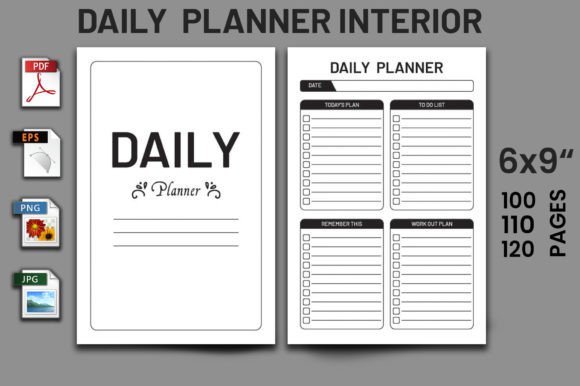
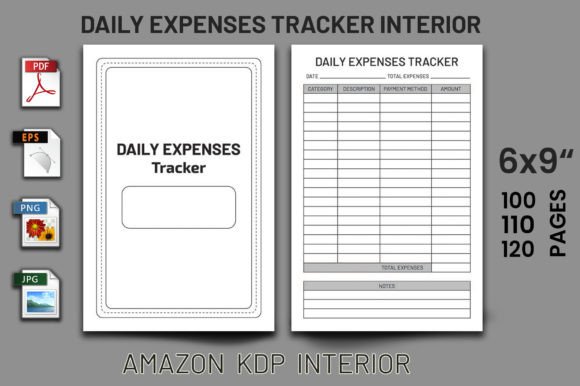
What exactly is a Daily Expenses Tracker KDP Interior? At its core, it is a professional-grade book interior, tested and formatted for a 6"x9" trim size, containing 100, 110, or 120 pages ready for upload to KDP. It is a "Low/No Content" book product, meaning the structure is provided, and the user fills in the content—their daily expenses. However, its strategic usefulness lies in this very design. It forces a routine of capture. By committing pen to paper within this predefined layout, you are not merely recording a coffee purchase; you are engaging in a daily audit of resource allocation. This habitual tracking creates a dataset that is invaluable for making better decisions.
Thoughtful use of a Daily Expenses Tracker KDP Interior supports goals in several key areas. For personal planning, it moves budgeting from an abstract concept to a concrete record, highlighting patterns and leaks. For business operations, especially for solo entrepreneurs and small business owners, it simplifies separating personal and business expenditures, a fundamental step for clean accounting and tax preparation. It aids in decision-making by providing evidence. Should you invest in a new software tool? The tracker may reveal you’re spending more on inefficient alternatives. It becomes a tool for branding and customer experience if you publish it; you are providing others with a system to improve their lives, which builds authority and trust.
Intentional Use: From Random Entries to Strategic Analysis
Approaching a Daily Expenses Tracker KDP Interior with intentionality is crucial. Before relying on it, consider your primary goal. Is it reducing discretionary spending, understanding business overhead, or simply achieving peace of mind through organization? Your goal dictates how you use the tracker. For example, a freelancer might use separate columns to tag expenses as "client-related," "software," or "marketing," turning the log into a project cost analysis tool.
A practical approach involves setting a weekly review ritual. Fill the tracker daily, but schedule time each Sunday to review the week’s entries. Look for categories, not just totals. Where did the money flow? This analysis phase is where the tracker’s value compounds. It shifts from a recording device to a planning instrument. Based on the data, you can make strategic adjustments for the following week—cutting a recurring subscription, reallocating funds to a more productive tool, or justifying a necessary investment you previously hesitated on.
Planning Tips for Maximum Operational Value
To integrate a Daily Expenses Tracker KDP Interior effectively into your workflow, start with customization. While the interior is ready for printing as a no-content book, the source files allow for adaptation. If you are a publisher creating this for a niche audience—say, college students or traveling photographers—you might add category prompts relevant to them before uploading to KDP. For personal use, mentally customize your entry method. Decide on your level of detail; capturing every $2 expense might be unsustainable, while logging all purchases over $10 might give you the macro view you need.
- Assign a Fixed Location: Keep the tracker and a pen in a consistent, visible spot—next to your keys or on your desk. This reduces friction and supports the habit.
- Use Symbols for Speed: Develop a quick notation system (e.g., "★" for business essentials, "?" for unnecessary splurges) for rapid logging during busy days.
- Link to Larger Goals: Write a financial goal on the inside cover. Seeing "Save $5k for new equipment" each time you open the book aligns daily logging with a long-term outcome.
The high-quality, print-ready PDF ensures the physical product feels professional, which psychologically reinforces the importance of the task. A well-produced book invites careful use.
The Risks of Uncontextualized Tracking
While powerful, using a Daily Expenses Tracker KDP Interior without clear goals or context carries risks. The primary danger is creating data without insight. Randomly filling pages for months without review leads to a ledger of numbers that never inform behavior. It becomes an administrative task, not a strategic one. Another risk is analysis paralysis. For some, overly granular tracking can induce anxiety or a hyper-focus on minor expenses while ignoring larger, less frequent financial decisions. The tool should serve clarity, not become a source of stress.
Furthermore, relying solely on a manual tracker without periodic integration into digital spreadsheets or accounting software might limit its utility for complex business finances. The Daily Expenses Tracker KDP Interior is an excellent capture tool and analysis starter, but for advanced tax planning or forecasting, its data should eventually be transferred to a digital system where calculations and projections are easier. Think of it as the frontline data collection unit in your financial intelligence apparatus.
Realistic Use Cases for Creators and Professionals
Consider a freelance graphic designer. They purchase a Daily Expenses Tracker KDP Interior, upload the tested PDF to KDP, and order a copy for themselves. They use it to track all client project expenses—stock image purchases, software subscription days, and mileage. After three months, they review the logs and realize that spending on a specific stock photo site is exceeding its value. They switch to a more economical alternative, directly improving their profit margin per project. The tracker provided the evidence.
For a small business owner managing a boutique, the tracker helps separate personal grocery trips from business supply runs. This clean separation, documented daily, simplifies quarterly bookkeeping and prevents costly混淆 during tax season. For a blogger or content creator, using the tracker to monitor advertising and promotional expenses can clarify the return on investment of different marketing channels.
Long-Term Value: Building a Habit of Financial Consciousness
The ultimate strategic observation about the Daily Expenses Tracker KDP Interior is that its greatest benefit may not be in any single month's savings, but in the cultivated habit of financial consciousness. Regularly interacting with your expenses builds a mindset of resource management. This mindset spills over into other areas: time management, project resource allocation, and strategic planning. The act of logging and reviewing trains you to look for patterns, question expenditures, and align spending with priorities.
For publishers and creators on Amazon KDP, this interior also represents a strategic product opportunity. By understanding the tool's practical value for others, you can position it effectively in the marketplace, using descriptions that speak to goal achievement and better results, not just page counts. This aligns with Google's E-E-A-T principles—demonstrating experience and authority by providing a tool that genuinely aids users.
In essence, a Daily Expenses Tracker KDP Interior is more than a book layout. It is a commitment device. It is a structured invitation to pay attention, to plan with evidence, and to make decisions grounded in daily reality rather than guesswork. Whether you use it personally to navigate your financial life or publish it to empower others, its value is unlocked through intentional, routine, and review-focused use. It turns the mundane task of recording a receipt into a foundational practice for strategic growth.