The Practical Power of an Editable Weekly Timesheet KDP Interior
In the bustling world of creative entrepreneurship and small business management, efficiency is often the bridge between ideas and income. For designers, freelancers, and self-publishers, time tracking isn't just an administrative chore; it's the raw data of productivity, the foundation for invoicing, and a crucial tool for project management. A well-designed Weekly Timesheet Editable KDP Interior transforms this essential task from a scattered note-taking exercise into a streamlined, professional process.
Beyond Basic Logging: A Designed Tool for Modern Creators
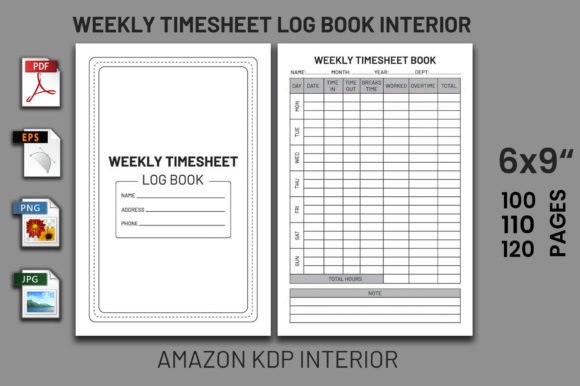
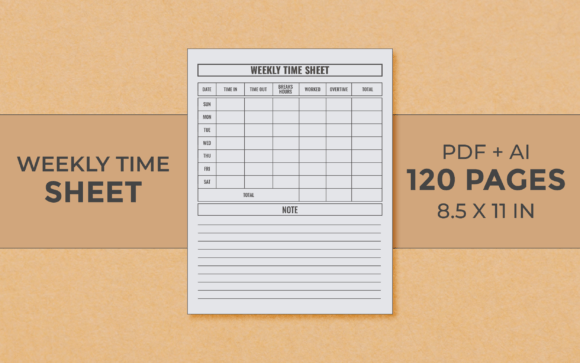
This particular interior is built with the practical needs of the KDP (Kindle Direct Publishing) creator in mind. At 120 pages, it offers substantial capacity for long-term tracking across multiple projects or clients. The 8.5×11 inches trim size is a standard, versatile format that feels familiar and functional, whether printed for a binder or used digitally on a tablet. Crucially, the design isn't merely functional; it’s crafted for clarity. The layout typically features clean sections for dates, client/project names, task descriptions, and hourly breakdowns, employing a visual hierarchy that guides the user naturally through the logging process.
The provision of a 300 DPI Print PDF file ensures that if you choose to offer a physical version or use it yourself in print, the quality is sharp and professional, avoiding any blurred lines or fuzzy text. But the true value for the dynamic creator lies in the Editable Original Files. Having the AI (likely Adobe Illustrator) source files means you can customize colors, adjust layout elements, or even integrate your own branding before uploading to KDP. This flexibility is a game-changer. Furthermore, the included PNG file with a transparent background offers immense utility for marketing—it allows you to easily create mockup images for your KDP listing, overlay the timesheet on different backgrounds, or use elements in social media graphics to promote your product.
Strategic Applications: From Personal Use to Commercial Products
The utility of this Weekly Timesheet Editable KDP Interior spans several layers of the creative ecosystem. For the individual—the blogger tracking writing hours, the crafter logging time on a complex project, or the consultant managing client work—it serves as a personal productivity hub. Using a designed, consistent format reduces the mental friction of daily logging and creates a reliable record.
On a commercial level, its primary application is, of course, as a ready-to-publish interior for the KDP platform. Entrepreneurs and publishers can quickly customize and upload it to offer a useful, niche product to a market of freelancers, students, and small teams. But its use extends further. Designers and marketers can employ the editable files as a design asset within larger projects. For instance, it could be integrated into a comprehensive business planner KDP interior, or its clean tables and structure could be adapted for other data-logging purposes like expense tracking or habit monitoring. The editable nature means it’s not just a single-use product; it’s a versatile template.
Building Professionalism and Consistency
Implementing a structured tool like this influences more than just time management. It cultivates a professional mindset. For a solo entrepreneur, consistently using a well-designed timesheet reinforces the seriousness of their venture and provides clear data for evaluating rates and workload. For a small team, it introduces a standardised method of reporting, ensuring everyone logs time in the same clear format, which simplifies consolidation and review.
When offered as a KDP product, the interior’s design directly impacts brand perception. A cluttered, poorly laid-out timesheet suggests a low-value, generic product. Conversely, a clean, logical, and visually balanced design—as implied by the quality specs of this interior—communicates value, thoughtfulness, and reliability to potential buyers. It aligns with the expectations of a professional audience looking for tools to enhance their own work.
Practical Considerations for Implementation and Customization
If you are considering using this Weekly Timesheet Editable KDP Interior for your own projects, a few practical steps will ensure the best outcome. First, evaluate the fit. Does the 120-page count meet your needs for a single-project logbook or a multi-client annual tracker? Review the layout in the provided PDF: does its column structure and task breakdown align with how you or your target audience categorizes work?
Then, leverage the editable files. This is where you can infuse brand identity. Consider adjusting color schemes to match your other products or your personal brand palette. You might tweak the title font or add a subtle logo watermark. The goal is to make it uniquely yours without compromising the readability and core functionality. When testing your customizations, always generate a new PDF and view it at different zoom levels to check that all text remains clear and all borders are intact.
For those publishing on KDP, remember that the commercial license inherent in such editable interiors allows you to sell the final product. However, always verify the specific terms of the product you acquire. Use the transparent PNG to create attractive, realistic mockups for your sales page—show the timesheet on a desk next to a laptop, or in a binder. This visual proof of utility significantly boosts audience engagement and conversion.
A Tool for Clarity in a Busy World
Ultimately, a resource like the Weekly Timesheet Editable KDP Interior is more than just a collection of pages and fields. It’s a designed solution for a common challenge. It takes the universal need to track time and packages it into an accessible, adaptable, and professional format. Whether you use it to streamline your own creative workflow or to build a commercial product for others, its value lies in its combination of solid structure and creative flexibility. In the hands of a designer, publisher, or busy freelancer, it becomes a quiet engine for organization, turning scattered hours into actionable data and contributing to the foundation of a more managed and productive creative practice.