Book Review Journal for KDP: Your Publishing Companion
For anyone navigating the world of Kindle Direct Publishing, organization is the silent engine behind success. A scattered list of reviews, hastily typed notes, and forgotten feedback can derail even the most promising book project. The Book Review Journal for KDP addresses this core need directly. It isn't just a notebook; it's a structured, purpose-built tool designed to transform the chaotic process of collecting and analyzing book reviews into a clear, actionable workflow.
Imagine you're preparing your manuscript for publication or analyzing feedback post-launch. Reviews—from beta readers, editorial services, or customers—are gold. They contain critical insights on plot, character development, pacing, and market reception. Yet, this valuable data often arrives in fragments: an email from a reader, a comment on a forum, a starred rating on Amazon. The Book Review Journal for KDP provides a single, dedicated repository to consolidate all this information, turning disparate points into a coherent strategy for revision, marketing, and future writing.
The Anatomy of a Purposeful Tool
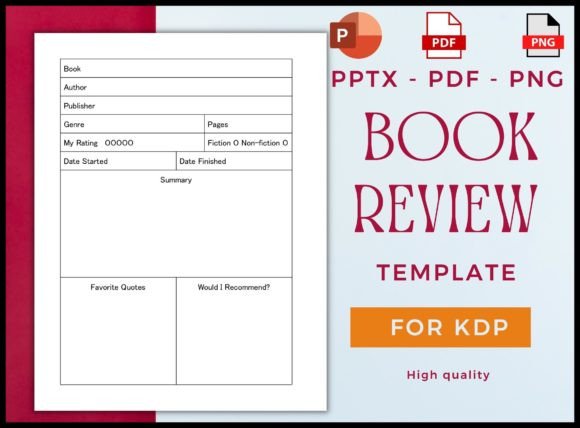
What makes this journal distinct is its deliberate design for the KDP environment. It comes as a complete package: a PDF ready for upload to KDP’s paperback printing system, an editable PowerPoint file for customization, and high-quality PNG files. This trifecta caters to different user needs. The PDF is KDP Tested with No Error, meaning it meets Amazon’s stringent formatting requirements for interior book files at the standard 8.5 x 11 inches size. You can upload it confidently, avoiding the common pitfalls of margin issues or layout errors.
The journal’s interior is built for utility. Its 120 pages offer ample space for systematic logging. The unique design likely provides structured sections or prompts—perhaps areas to record the reviewer’s name, the date, the source of the review, key praises, constructive criticisms, and your own action items. This structure is crucial. It pushes you beyond simply collecting quotes; it encourages analysis. With no bleed required, it’s perfectly suited for a standard paperback interior, ensuring a clean, professional look in the final printed product.
Practical Applications Beyond the Title
The utility of the Book Review Journal for KDP extends across multiple scenarios. For an author, it’s a beta reader management system. Before publication, you can distribute copies to a select group, using the journal to track each person’s feedback methodically. Comparing notes across several journal entries can reveal patterns—if multiple readers highlight the same slow chapter, that’s a clear signal for revision.
For a publisher or small press managing multiple titles, the journal becomes a project file for each book. It standardizes the review collection process, making it easier to compare feedback across different genres or authors. For educators or writing coaches, it could serve as a teaching tool, helping students learn how to critically assess and incorporate feedback into their work.
Post-publication, its use shifts. Authors often monitor customer reviews on Amazon and other platforms. Manually tracking these can be overwhelming. Using the journal to log standout positive reviews provides a curated list of quotes for future marketing materials—social media posts, website testimonials, or the “Reviews” section in a subsequent edition. Conversely, logging constructive criticism from customers can inform edits for a future second edition or provide insights for your next book.
Turning Feedback into Forward Motion
The core benefit of this tool is operational clarity. Writing and publishing are creative endeavors, but their success often hinges on administrative efficiency. By externalizing the review management process into a dedicated journal, you free up mental space. Instead of holding fragments of feedback in your mind, you have a physical or digital document. This tangibility reduces cognitive load and anxiety, making the feedback process feel manageable rather than daunting.
Furthermore, it enhances communication and collaboration. If you work with an editor, designer, or marketing assistant, a well-maintained Book Review Journal for KDP serves as a central reference point. You can point to specific logged reviews to justify a design change, a copy edit, or a marketing angle. It adds a layer of professionalism and evidence-based decision-making to your publishing journey.
From a branding perspective, using a tailored tool like this reflects a commitment to quality. It signals that you treat your work—and your readers’ opinions—with seriousness. This meticulous approach can translate into a better final product, which is the ultimate goal of any author or publisher.
Implementing the Journal in Your Workflow
When considering integrating this journal, start with the editable PowerPoint file. This is where you can personalize. Perhaps you want to add a column for “Priority Level” or “Genre-specific Metric.” Customization ensures the tool fits your specific niche—whether you write technical nonfiction, romance novels, or children’s books. The high-quality PNG files also allow for flexibility; they could be imported into other design software if you wish to create a hybrid layout.
A practical recommendation is to begin using the journal during the beta reading phase. Create a routine: as each review arrives, immediately log it. Don’t let them pile up. This habit builds a comprehensive dataset early. Later, when you’re ready to revise, you won’t be sifting through old emails; you’ll be reviewing a curated, analyzed document.
For post-launch, set a weekly or monthly review audit. Spend thirty minutes logging new public reviews from your sales channels. Over time, this creates a living document that charts the public perception of your book, revealing trends that might inform your next launch strategy or content creation.
A Tool for the Real-World Creator
In the end, the Book Review Journal for KDP solves a real, often overlooked problem in self-publishing: information management. Publishing is not just about writing and uploading; it’s about iterating based on feedback. This journal provides the framework to do that effectively. It turns noise into signal, and reaction into strategy.
Its value lies in its specificity and readiness. The KDP Tested PDF removes a major technical barrier for paperback creation. The 120-page count offers substance without being unwieldy. By providing both a ready-to-use and an editable version, it accommodates the user who wants simplicity and the user who demands control. Whether you’re a hobbyist author publishing your first novel or a professional freelancer managing client books, this journal offers a structured path through one of the most critical—and often chaotic—aspects of the publishing process: learning from the voices of your readers.