Your Weight Loss Journey: Mapping the Path to a Healthier You
When we talk about a weight loss journey, it’s more than just a diet plan or a workout schedule. It’s the entire process—the mindset, the daily choices, the setbacks, and the victories—that leads someone from a starting point to a healthier destination. It’s personal, it’s often challenging, and it requires a map. For anyone looking to lose weight, understanding that this is a journey, not a quick trip, is the most critical first step. It shifts the focus from short-term deprivation to long-term transformation.
Why a Structured Journey Matters
Imagine trying to drive across the country without a map, GPS, or any sense of the route. You’d likely get lost, frustrated, and might give up entirely. The same is true for changing your body and health. A defined weight loss journey provides that roadmap. It’s where you consciously decide to take control, not just of your meals, but of your habits, your environment, and your mindset. People use this framework when they’ve realized that sporadic efforts don’t work, and when they’re ready for a holistic change.
This often happens after a specific trigger—a doctor’s advice, a feeling of constant fatigue, a life event like a wedding, or simply the cumulative effect of years of neglecting health. The journey begins not when you start counting calories, but when you commit to viewing your health as a project worth investing in. It’s a decision to move from passive to active.
Real-World Applications: Where Your Journey Takes Shape
The beauty of a well-planned weight loss journey is that it adapts to your life, not the other way around. It finds its place in the rhythm of your real days.
For the Busy Professional
Consider a marketing manager, Sarah. Her day is back-to-back meetings, client lunches, and late-night emails. For her, a journey needs to be integrated. It’s not about spending two hours at the gym; it’s about the 10-minute morning stretch routine she does before checking emails, the healthy snack pack she prepares on Sunday to avoid pastry-filled meetings, and the walking meeting she suggests instead of sitting in a conference room. Her weight loss journey is built around time efficiency and habit stacking, using small, consistent actions that compound over weeks and months.
For the Creative or Freelancer
A graphic designer working from home faces different challenges: irregular hours, the proximity of the kitchen, and the sedentary nature of the work. His journey might focus on environmental design. He uses his lunch break for a brisk walk outside to break the screen time, he pre-cooks batches of healthy meals so that the easiest option is also the good option, and he sets a timer to stand and move every hour. For him, the journey is about creating structure within flexibility, using his control over his workspace to support his goals.
For Parents and Caregivers
Juggling family life makes any personal project seem daunting. A parent’s weight loss journey often becomes a family health upgrade. It manifests in swapping out sugary drinks in the pantry, finding active games to play with the kids instead of passive screen time, and turning meal prep into a shared activity. The journey here is about leading by example and finding synergy, where personal health goals improve the home environment for everyone.
What to Consider Before You Begin
Embarking on a weight loss journey is an investment of your energy and attention. Before you download a plan or buy a program, pause and reflect on a few key things.
First, assess your realistic capacity. How much time and mental bandwidth do you truly have? A journey that requires 90-minute daily workouts might crumble under a busy schedule, whereas one focused on 20-minute sessions and better food choices could thrive. Be honest about your starting point—not just your weight, but your lifestyle.
Second, consider the support and resources you need. Do you thrive on community, like a group class or an online forum? Or do you prefer a self-guided, private approach with clear materials? Some journeys are social, others are solitary. Knowing this helps you choose tools that keep you motivated.
Finally, think about measurement beyond the scale. What non-scale victories matter to you? Better sleep, more energy throughout the day, improved mood, or feeling stronger? Your journey should track these markers too, as they often provide the motivation to persist when the scale seems slow.
The Tools That Can Guide Your Path
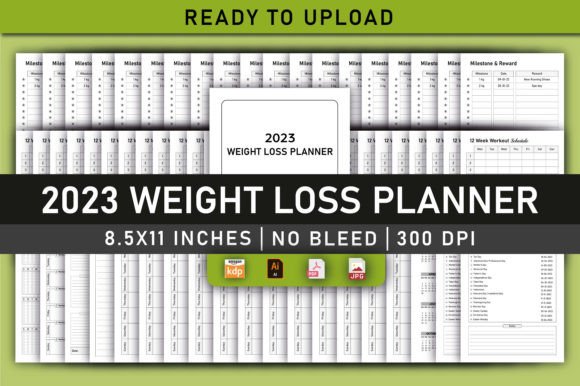
A successful journey often uses external tools as guides and trackers. This is where well-designed resources come into play. High-quality, printable materials—like a 90-page planner with AI, PDF, and SVG files—can become the physical or digital anchor for your plan. They offer clarity and remove the daily guesswork.
A creator or blogger might use these editable files to customize a plan that fits their niche and audience, sharing their adapted journey as content. An educator could incorporate the principles into a course on wellness. A small business owner in the health space might use the high-resolution JPEGs with CMYK color and 300 DPI for professional print materials, like brochures or clinic handouts. The versatility of the resource matches the versatility of the journey itself—it’s not a one-size-fits-all prescription, but a adaptable toolkit.
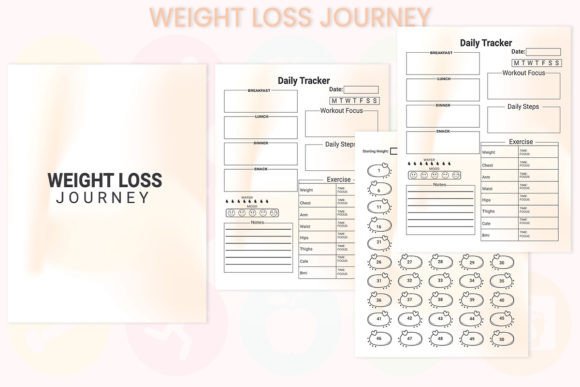
The key is that the tool serves the journey, not dictates it. You use the calendar to log your water intake because accountability helps you. You use the meal template because it saves you mental energy on Tuesday nights. You refer to the progress charts because seeing your consistency visualized reinforces your commitment. The outcome isn’t just using the files; it’s the reduced friction in your daily decision-making, which is the true engine of lasting change.
The Long-Term View: When the Journey Becomes a Lifestyle
The ultimate goal of any weight loss journey is that it eventually dissipates into your normal life. The strict “journey” phase—with its tracking and conscious effort—transitions into a maintained lifestyle where healthy choices are the default, not the exception. This happens when the practices have become ingrained habits.
You’ll know you’re approaching this point when you automatically choose the vegetable side without debating, when you look forward to your movement time, and when a stressful day doesn’t automatically mean a dietary derailment. The journey materials you used early on might be archived, but the framework they helped build remains. This is the real benefit: creating a sustainable system for health that withstands life’s inevitable ups and downs.
Your weight loss journey is, in essence, a project of self-redesign. It’s practical, personal, and profoundly impactful. By approaching it with the seriousness of a journey—with planning, tools, and an understanding of your own terrain—you move beyond wishful thinking into tangible, daily progress. That progress, compounded over time, is what leads not just to a changed body, but to a changed life.