The Practical Value of Suba Diving Log Book - KDP Interior
For individuals looking to create and publish low-content books through Amazon's Kindle Direct Publishing platform, finding a reliable, tested interior template can significantly streamline the process. The Suba Diving Log Book - KDP Interior is a digital product designed specifically for this purpose. It is not a physical book, but rather a formatted digital file package that serves as the interior layout for a dive logbook. Its primary value lies in its readiness for publishing, having been formatted and tested according to Amazon KDP's technical specifications.
Understanding the Product's Core Function
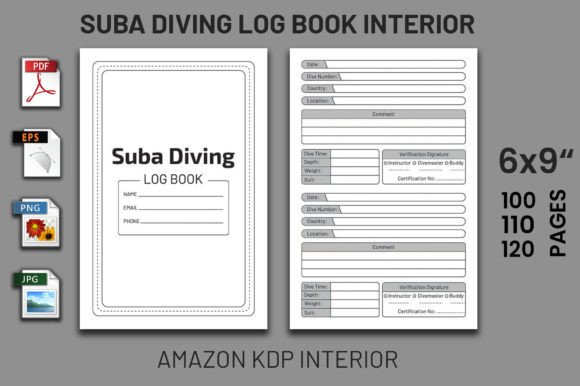
At its core, the Suba Diving Log Book - KDP Interior is a tool for creators. It provides a pre-designed, structured page layout for a scuba diving logbook. Users purchase the digital files, and then upload them to Amazon KDP as the interior of a new book listing. This eliminates the need for individuals to design the pages themselves using software like Adobe InDesign or complex word processors. The template includes standard logbook elements such as spaces for dive date, location, depth, time, conditions, and notes, all arranged in a consistent, readable format.
The key characteristic that makes this product worth discussing is its claimed compliance with KDP's publishing requirements. The specification list indicates it has a trim size of 6" x 9", includes no bleed, and comes in multiple page count options (100, 110, 120 pages). More importantly, the description states it is "100 formatted and tested for KDP" and "Ready for Upload to KDP." For a publisher, this tested status is a critical feature, as Amazon KDP can reject files for subtle formatting issues like margin discrepancies or image quality.
Strengths and Practical Usability
The practical strengths of the Suba Diving Log Book - KDP Interior revolve around efficiency and risk reduction. A major strength is the provision of multiple file formats. The package includes a high-quality print-ready PDF, which is the primary file uploaded to KDP, but also offers source files like EPS, PNG, JPG. This flexibility is noteworthy. While many templates offer only a final PDF, the inclusion of source files allows for customization. A user with basic graphic software skills could potentially modify headings, adjust minor layout elements, or insert a unique logo, thereby creating a more distinctive product from a standardized base.
Its usability is straightforward for anyone familiar with the KDP upload process. After purchase, the user would download the PDF file for their chosen page count, create a new paperback project in KDP, and upload this PDF as the manuscript. The consistent, professional presentation of the logbook pages within the template means the final printed product should have clear, organized tables for dive data entry. This consistency is vital for a logbook's effectiveness; divers need a reliable, predictable format to record information across many entries over years.
Performance in Real-World Publishing Scenarios
Analyzing its potential performance requires considering the low-content book market on Amazon. The niche of scuba diving logbooks is specific but established. A well-executed, physically robust logbook can serve a practical need for recreational and professional divers. The interior template's quality, as presented in the final PDF, will directly affect the perceived quality of the printed book. A high-resolution, properly margined PDF should result in sharp text and clean lines in the printed copy, which is essential for a functional record-keeping tool.
The reliability hinges on the claim that the files are "tested." In a real-world scenario, this should mean the upload process is smooth and the KDP preview tool shows no formatting warnings. A significant limitation for any pre-made interior, however, is its generic nature. While it provides a functional dive log structure, it does not include unique cover design, marketing copy, or ISBN assignment—all necessary steps the publisher must complete separately. Furthermore, the "low/no content" classification means the book's value is primarily in its structure, not its written content. Success depends on the publisher's ability to market the physical product effectively to the target audience of divers.
Who Benefits Most from This KDP Interior?
The Suba Diving Log Book - KDP Interior is most beneficial for a specific segment of the KDP publisher community. Entrepreneurs or small business owners looking to add a niche physical product to their offerings without investing in custom design could use this as a foundation. Freelancers or designers who manage KDP projects for clients might employ it as a time-saving asset for a client requesting a dive logbook. Serious hobbyists in the diving community themselves might publish it as a side project, perhaps pairing it with a custom cover that reflects their local diving region.
It is less suitable for publishers seeking highly unique, branded products or those wanting to build a large series of differentiated logbooks. The template provides a standard solution. Educators running diving courses might find it a cost-effective way to produce professional logbooks for students, but would need to evaluate if the included layout meets any specific certification body's logging requirements.
Evaluating Long-Term Value and Flexibility
The long-term value of a digital interior template like this is tied to its reusability and the longevity of the KDP platform. Once purchased, a user can theoretically use the files to publish multiple editions or variations, though they must create new book listings for each. The flexibility offered by the source files enhances this long-term value, allowing for iterative improvements or seasonal variations.
A professional observation is that the product's effectiveness is not isolated. Its value is multiplied when combined with a publisher's skills in cover design, keyword research for Amazon listings, and understanding of the diving equipment market. The template alone produces a functional interior, but the market success of the final book depends on these complementary competencies. A practical recommendation for any potential user is to first review the provided sample pages thoroughly, ensuring the logbook's entry fields align with the data divers typically record.
In conclusion, the Suba Diving Log Book - KDP Interior represents a practical, tested solution for a specific publishing need. It reduces technical barriers and provides a reliable starting point for creating a physical dive log. Its worth is clear for those who value time efficiency and verified compatibility with Amazon's system. However, its utility is foundational; it requires the publisher to bring additional market knowledge and publishing skills to create a successful end product. By understanding its role as a component within a larger publishing workflow, creators can make an informed decision on whether this template fits their project goals and audience.