The Blog Post Planner 12 Months: A Systematic Framework for Content and Brand Growth
For content creators, bloggers, and small business owners, the gap between creative vision and consistent execution is often where progress stalls. The sheer volume of tasks—from ideation to publishing, marketing to reflection—can overwhelm even the most dedicated individuals. A structured approach is not merely about organization; it’s about creating a sustainable system that transforms sporadic effort into a cohesive brand narrative. The Blog Post Planner 12 Months serves as this foundational system, an undated, process-oriented tool designed to integrate seamlessly into your existing workflow, whether you’re launching a new project or refining an established online presence.
Where Planning Fits in the Creative and Business Process
Effective content creation is a cyclical process, not a linear task. It involves phases of strategic goal-setting, active production, targeted distribution, and analytical review. Many creators jump directly into the production phase without a clear map, leading to inconsistent output, misaligned messaging, and wasted effort. The Blog Post Planner 12 Months is engineered to be used at the inception of this cycle—or at any point where you need to regain control. Its undated format means you can begin your structured planning today, regardless of the calendar month, aligning it perfectly with your current project timeline or business quarter.
This planner functions as a central command hub. Before diving into writing, you use it to define your blog goals and marketing plan, ensuring every piece of content serves a broader objective. During the active month, it becomes a live document for tracking content creation and scheduling social media exposure. After a campaign or month concludes, the included Monthly Reflections page prompts a review, turning experience into actionable insight for the next cycle. This before-during-after applicability makes it a versatile companion throughout the entire content lifecycle.
Integration with Your Existing Tools and Resources
A planner is only as good as its compatibility with your real-world ecosystem. The Blog Post Planner 12 Months is designed not to replace your digital tools but to complement and direct them. Consider it the strategic blueprint that informs your use of other platforms.
Synergy with Digital Platforms and Assets
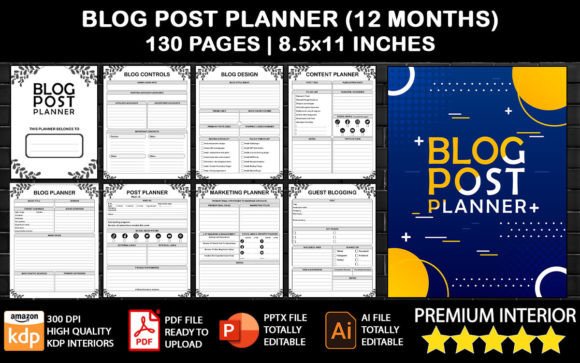
Your social media calendars in Meta Business Suite, Trello cards for content creation, or Google Docs for drafts all require a strategic foundation. The planner’s dedicated sections for Social Media, Content Planner, and Post Planner provide that high-level overview. You first brainstorm and schedule your core themes and posts here, then execute the detailed work in your preferred digital apps. This separates strategy from tactical execution, preventing platform overload.
Similarly, sections for Affiliate Accounts and Brand Creation help you consolidate key business information. Instead of hunting through emails or spreadsheets for affiliate IDs or brand color codes, you maintain a curated reference within your planner, improving efficiency during the actual publishing process. It acts as a bridge between your creative mind and your operational assets.
Collaboration and Delegation
For entrepreneurs or marketers working with teams, freelancers, or guest contributors, the planner enhances clarity. The Guest Blogging and Monthly Marketing Planner pages offer a clear framework for outreach campaigns and collaborative projects. You can define goals, track pitches, and schedule content from guests in one place, making it easier to brief team members or partners. This centralized view supports quality control and ensures everyone is aligned with the monthly or quarterly objectives documented in the Monthly Goals pages.
Practical Implementation: Building a Cohesive Workflow
Adopting a new tool requires a method that feels natural. Here’s how to integrate the Blog Post Planner 12 Months smoothly into your routine, using its structure to enhance consistency and output quality.
Initial Setup and Customization
Begin with the Blog Controls and Brand Creation pages. Even if your brand exists, revisiting its core elements—mission, audience, visual identity—ensures your upcoming content aligns with it. This is a critical preparation step that many skip, leading to a diluted online presence. Because the planner provides editable files (PPT for interior, AI/EPS for cover), you can even customize certain template elements to better fit your terminology, though the default structure is comprehensively designed.
A Sample Monthly Workflow Cycle
- Week 1 (Planning): Consult your long-term goals. Using the two-page Monthly Goals spread, set 3-4 key targets for the month (e.g., increase email sign-ups by 10%, publish two pillar posts). Then, populate the Content Planner with thematic ideas that support those goals.
- Week 2-3 (Creation & Scheduling): Translate ideas into actionable plans on the Post Planner pages, outlining drafts, keywords, and assets needed. Simultaneously, use the Social Media page to plan promotional threads for each piece. Input relevant deadlines from your Affiliate Accounts or product launches into the Marketing Planner.
- Week 4 (Execution & Review): As you publish, use the planner to track progress. Finally, spend time on the Monthly Reflections page. Analyze what worked, what didn’t, and how your blog design or user feedback might inform next month’s approach. This closes the loop.
This cycle turns disjointed tasks into a coherent process. The repeated pages each month provide a consistent framework, reducing mental load and building a habit of structured creation.
Long-Term Value: Beyond a Single Project
The true test of any productivity tool is its utility over quarters and years, not just weeks. The Blog Post Planner 12 Months is built for this longitudinal use.
Creating a Living Record and Adapting Strategy
With 130 pages spanning 12 months of repeated templates, the planner becomes an archive of your content strategy evolution. By reviewing past Monthly Reflections and Monthly Goals, you can identify patterns, seasonal opportunities, and recurring obstacles. This historical data is invaluable for annual planning and reporting. The undated nature is key here; if you miss a month or shift focus to a different project, you simply pick up where you left off without wasting pages, ensuring the resource remains relevant through business changes.
Ensuring Consistency and Quality Control
Brand growth relies on consistent messaging and reliable quality. The planner’s structured sections for Blog Design and Post Planner act as checkpoints. Before publishing, you can verify that a post adheres to your outlined structure and design guidelines, improving the final product’s professionalism. This systematic approach mitigates the rushed, last-minute publishing that often compromises quality.
Key Considerations for Effective Use
To maximize the planner’s impact, approach it as a strategic partner rather than just a logbook.
First, commit to the reflection phase. The Monthly Reflections page is arguably the most valuable for long-term improvement. Without it, planning remains reactive. Second, link your planner to your digital calendar. Use the dates and deadlines you note in the Marketing Planner or Post Planner to set reminders in your digital calendar. This creates a seamless bridge between paper/digital planning and real-world action. Finally, start simple. Don’t attempt to fill every section in the first month. Focus on Monthly Goals, Content Planner, and one social platform. Expand your use as the process becomes habitual.
Adapting to Various User Profiles
The planner’s design supports diverse applications. A freelancer might use it to manage client content batches and self-promotion. An educator running a blog could plan lesson-series posts and track community engagement. A small business owner would integrate product launch timelines from the Marketing Planner with blog content that supports those launches. The inclusion of Guest Blogging and Affiliate Accounts sections makes it equally suitable for those monetizing their content. Its utility stems from its comprehensive view of the entire content ecosystem, not just the writing act.
In essence, the Blog Post Planner 12 Months provides a tangible framework to navigate the complex process of building an online presence. It translates ambition into actionable steps, connects creative work with business goals, and fosters a discipline of regular review and adaptation. By centralizing your goals, content, marketing, and reflections in one tested, high-quality format, it reduces the friction that often hinders consistent execution, allowing you to focus not just on creating content, but on building a brand.